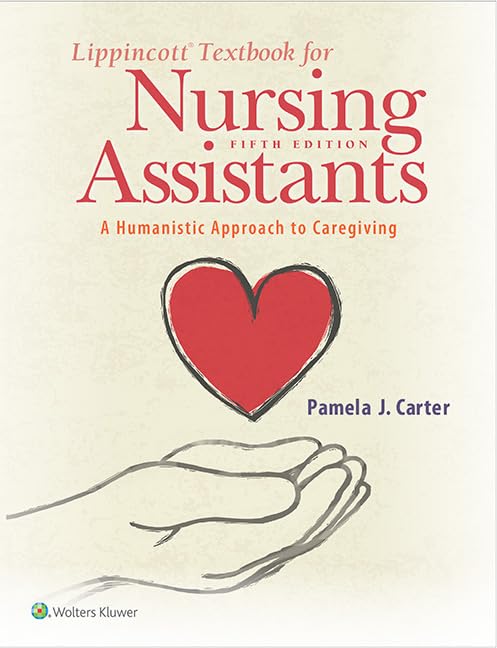
Lippincott textbook for nursing assistants : a humanistic approach to caregiving / Pamela J. Carter.
Material type: TextPublisher: Philadelphia : Wolters Kluwer, [2020]Edition: Fifth editionDescription: xxxi, 912 pages : allustrations ; 28 cmContent type:
 - text
- unmediated
- volume
- 9781975108502
- 1975108507
- Textbook for nursing assistants
- 610.730698 23 C.P.L
| Item type | Current library | Call number | Status | Date due | Barcode | Item holds |
|---|---|---|---|---|---|---|
 Books
Books
|
Media and mass communication Library T3 | 610.730698 C.P.L | Available | MA0002177 |
Includes index.
"Nursing assistant education is changing. Indeed, it must change if we are to keep pace with the needs of the health care industry. Today, the numbers of nursing assistants employed by hospitals, acute and extended-care facilities, hospice agencies, and home health care agencies are growing rapidly. In addition, the composition of the long-term care population (the population most frequently cared for by nursing assistants) is changing. Shorter hospital stays and advances in medicine and technology mean that today's long-term care resident tends to be older, sicker, and in need of more assistance with activities of daily living than the resident of 15 years ago. As educators, we must seek to provide our students with the skills and knowledge that they will need to meet the changing needs of their patients, residents, and clients, and to advance in their own careers"--Provided by publisher.
There are no comments on this title.